Kurnell

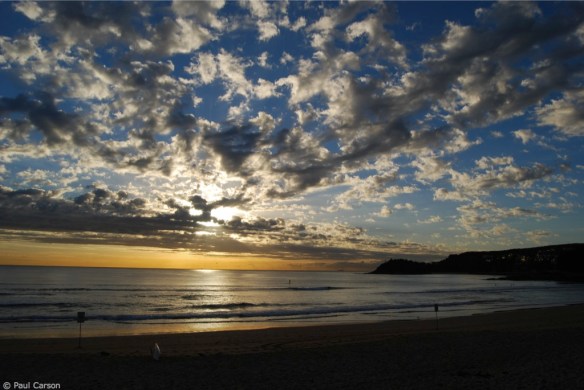
Near the place where Captain James Cook first set foot on Australian soil in 1770.

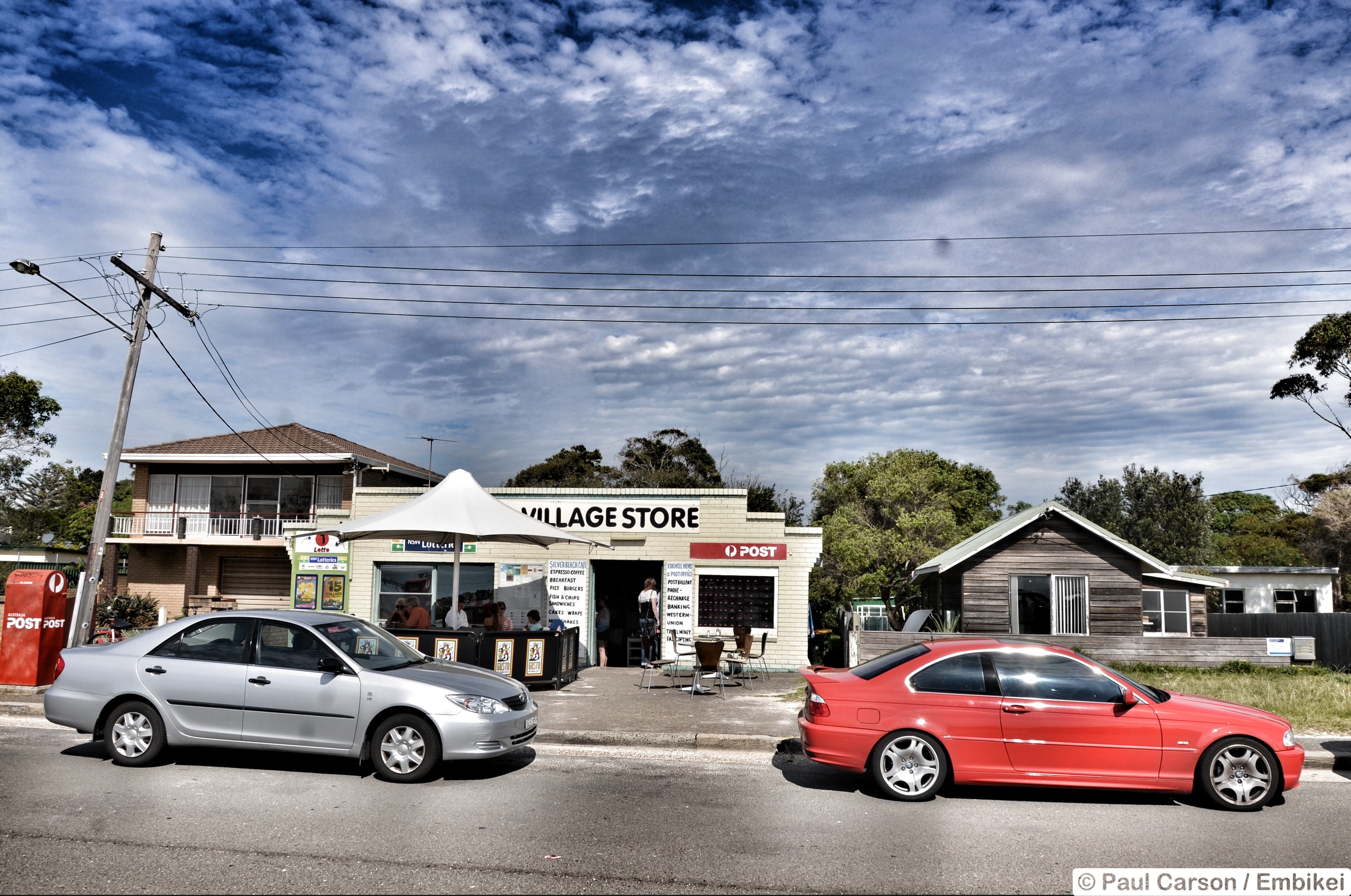
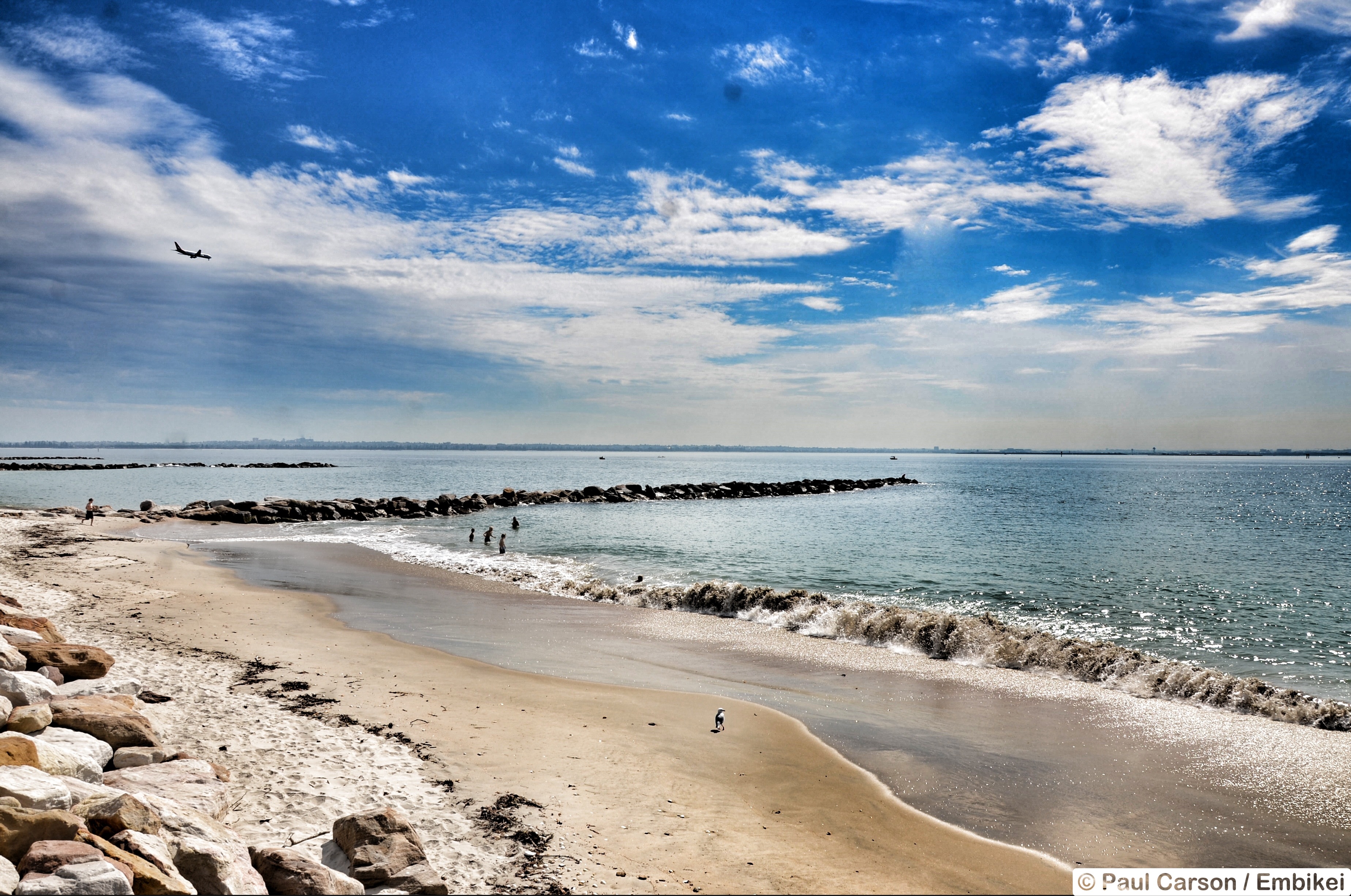
It’s a nice area on the southern shore of Botany Bay, isolated enough for it to be easy to pretend you’re nowhere near Sydney. There’s almost a small coastal town vibe to Kurnell even though it’s only 22 kilometers from the city centre.

Photo 14-04-13 13 26 22

Photo 14-04-13 13 39 12

Photo 14-04-13 13 41 02

Photo 14-04-13 13 42 06

(I’ve also noted from these images how badly my camera needs a clean…)

Violence in downtown Sydney over anti-Islam movie

A protest against the controversial film Innocence Of Muslims turned violent today when members of Sydney’s Muslim community marched on the United States consulate in Martin Place.

Protesters in Martin Place.

A protester dousing his friend’s eyes with water after he was sprayed with pepper spray by police.
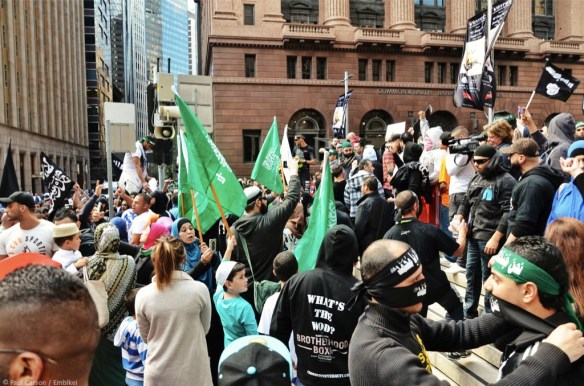
Protesters in Martin Place.
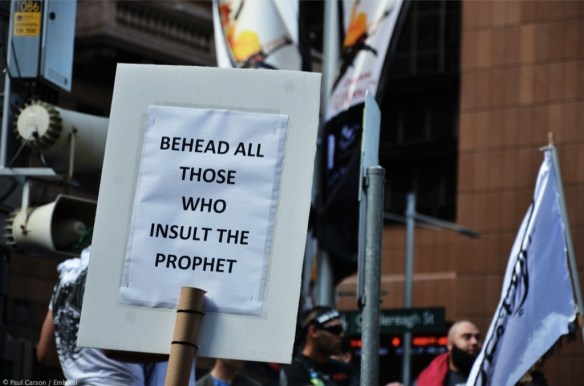
One of the placards Muslim protesters carried through the Sydney streets.

Police form a protective cordon outsdie the US consulate in Martin Place.

Muslim protesters holding placards outsdie the US consulate in Martin Place.
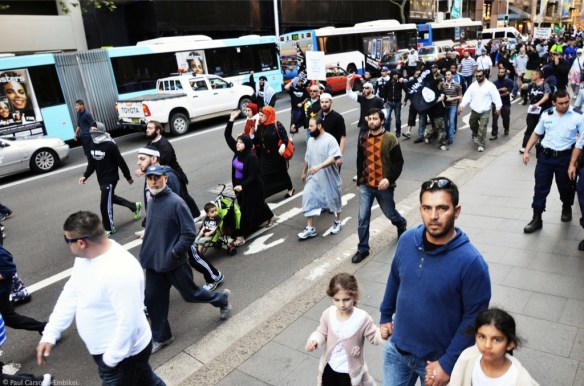
Protesters making their way to Hyde Park.

Muslim protesters on Market Street.

NSW Police in action on Market Street.

NSW Police in action on Market Street.

Police use pepper spray on protesters

Police use pepper spray on protesters
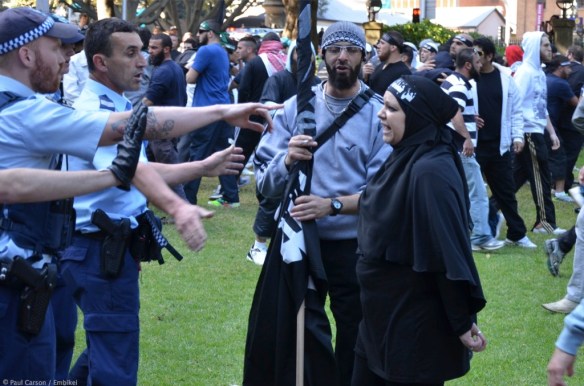
Police and protesters face off.
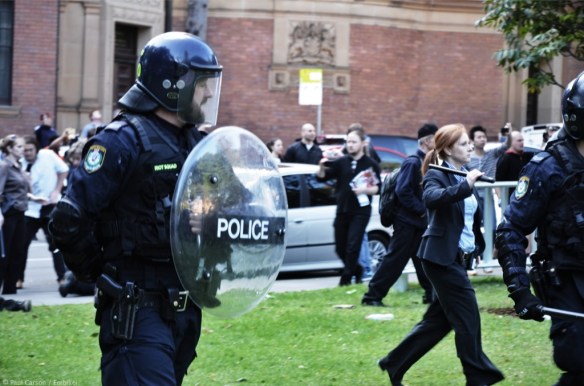
Riot Squad

Muslim protesters in Hyde Park
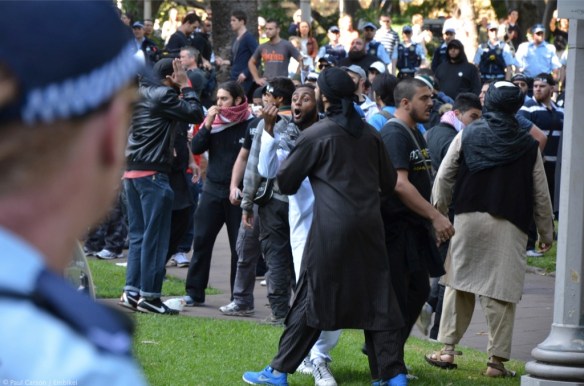
Muslim protesters in Hyde Park

Muslim protesters in Hyde Park

Riot Squad officers lined up along William Street

Injured NSW Police officer receives treatment from Rescue Squad member

Starting at Sydney’s Town Hall, the protesters then moved to the US consulate in Martin Place where they encountered hundreds of police who were deployed to provide extra security.

Carrying placards and denouncing the film as a blasphemous insult to Islam, the protesters then marched to Hyde Park where they were encircled by the police. There were violent outbursts where a small number of protesters threw bottles of water and other objects at police who then used pepper spray to subdue the group.

The protesters attempted to move further into Sydney’s central business district but were thwarted by a police blockade in Market Street. Another clash broke out which resulted in one police officer receiving a cut to his head. He was removed from the scene by his colleagues and treated for his injuries.

The protesters then returned to Hyde Park where they held a prayer session. Afterwards, Muslim spokespeople urged the crowd to remain calm and “be guided by love for Allah”.

Despite the calls for calm and restraint, there were many placards being carried by protesters which read, “Behead those who insult the Prophet” and, “Obama Obama we love Osama.”

However, New South Wales Police Minister Mike Gallagher acknowledged that information received by police indicated that the protest was to be largely peaceful, but was marred by elements in the group that “were there for confrontation.”

Minister Gallagher said that there was a protest organised for the following day, Sunday, and that police were unaware of a rally happening today.

“Today wasn’t a lawful protest,” Minister Gallagher said, “and there may well be that some people take it upon themselves to again turn up on Sunday in Martin Place or any other part of the city, then be rest assured the police planning is now under way tactically in relation to that.”

At about 5PM today, the protesters gathered in Hyde Park were prepared to leave peacefully, but were ordered by police to “disperse in an orderly fashion”.

This led to another clash near the entrance to St. James Station, and protesters then fled through Hyde Park towards Darlinghurst.

Pursued by the Riot and Public Order Squad and police on horseback, the protesters dispersed through various back streets through Darlinghurst.

Speaking to the press after the protesters had left Hyde Park, NSW Police Superintendent Mark Walton praised police action throughout the day.

“I think we have actually acted very professionally and responded very well to what was a completely unannounced and unorganised protest,” Supt. Walton said. “There was no advice given to police by this group that they intended to protest and, as a result, in a very short amount of time we had a significant amount of police.”

Six police officers were injured, and eight protesters were arrested for various offences.

Visiting Pol Pot’s Grave

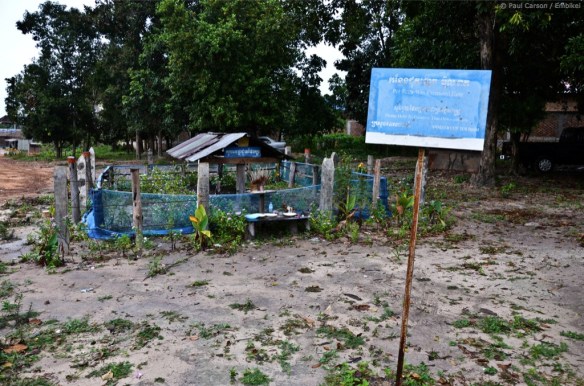
ANLONG VENG, CAMBODIA – Grey clouds hung heavy in the dim sky, and a light rain fell. The sun was a milky disc and the air was noticeably cooler than what’s generally found in the rest of Cambodia.

A perfect day to inspect the final resting place of the former leader of a genocidal regime that slaughtered millions in under four years.

The site where former Khmer Rouge leader Pol Pot was cremated.

Sunshine and twittering birds would feel out of order when viewing the final resting place of a man who had a major hand in the death of millions of his fellow Cambodians. Also vastly inappropriate would be some towering monument to his purity of vision, the glory of a revolution that was meant to make Cambodia a self-sufficient agrarian paradise, a vision that soon gave way to total insanity, the systematic slaughter of a nation, and the near-total destruction of a culture that has spanned over a thousand years.

Pol Pot died in mid-April of 1998 (nobody knows the exact date, though April 15 is widely cited) in Chong Sa Ngam village north of Anlong Veng, about a kilometer from the Thai border. Equally speculative is the cause of death. A heart attack, old age, pneumonia, suicide, poisoning by disgruntled ex-Khmer Rouge forces, even assassination by a Thai hit squad are some of the possible causes that have been aired since that day. Like many things in Cambodia, the truth is obscured by speculation, wishful thinking, and myth,

Immediately after his death, Pol Pot’s body was photographed in situ and promptly taken outside and cremated. His furniture and some of the material from his house were used as fuel for the pyre. Photographs of the event make it seem more like he was burned along with a pile of rubbish that was lying around.

Again, some would see that as fitting.

More impressive, if that’s the word, is the grave of Ta Mok (named Chhit Choeun at birth), the commander of the Khmer Rouge’s military.

Ta Mok’s grave

After the Vietnamese removed the Khmer Rouge from power in 1979, Ta Mok fled to northern Cambodia with Pol Pot and continued to direct missions against the Vietnamese and, later, the Cambodian government lead by Hun Sen.

Eventually captured by the government in March 1999, Ta Mok was taken to Phnom Penh and placed in custody awaiting trial for his crimes. He eventually died without facing trial on 21 July 2006.

Prior to his arrest, Ta Mok spent his time at a house in the Dângrêk Mountains north of Anlong Veng.

Grafitti inside Ta Mok’s mountain retreat

He also maintained a villa on the outskirts of Anlong Veng.

Interior of Ta Mok’s house in Anlong Veng

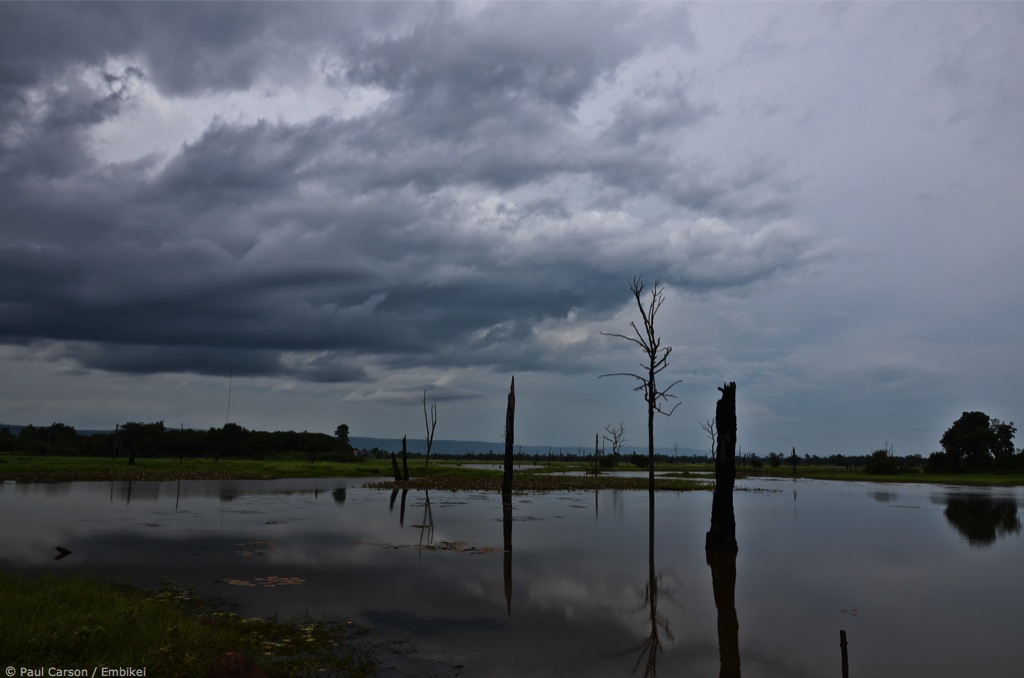
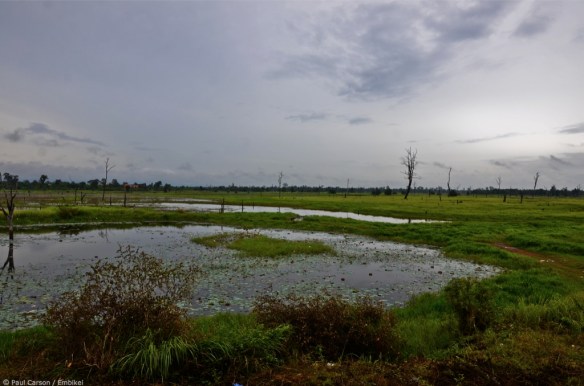
A lake as seen from Ta Mok’s house. The lake formed as a result of dam construction on the edge of town. The dam was commissioned by Ta Mok during the Khmer Rouge years.

The town has a dark history, with Khmer Rouge elements being very active here as recently as 1998. But that terrible past runs in direct contrast to the spectacular beauty of the natural scenery. Deep green jungle covers tall mountains that are cloaked in mist during the rainy season.

Anlong Veng, because of its location and its recent history, has been isolated from the rest of Cambodia until recently. Many towns are given the “Wild West” tag in this country, but Anlong Veng deserves it more than most of the others. Despite being connected to Siem Reap by a decent road, it may continue to be relatively isolated for a while yet.

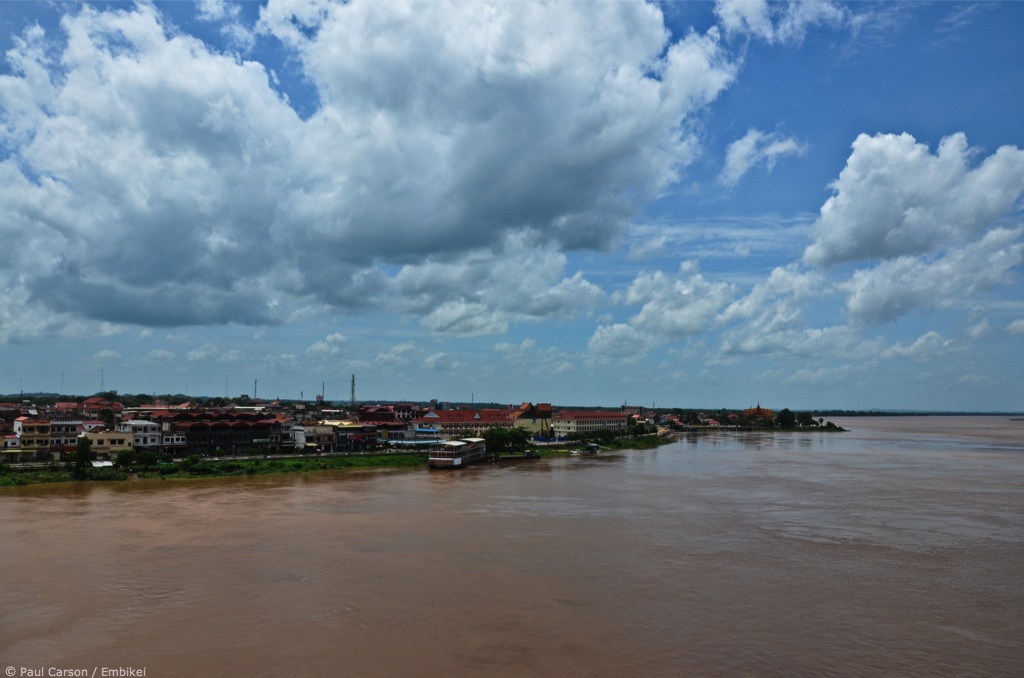
Relaxing By the Mekong (again)

As I said when I went on my first walk around Kampong Cham yesterday, “Another day, another new favourite Cambodian town.”

Kampong Cham is Cambodia’s third-largest town and lies beside the Mekong River.

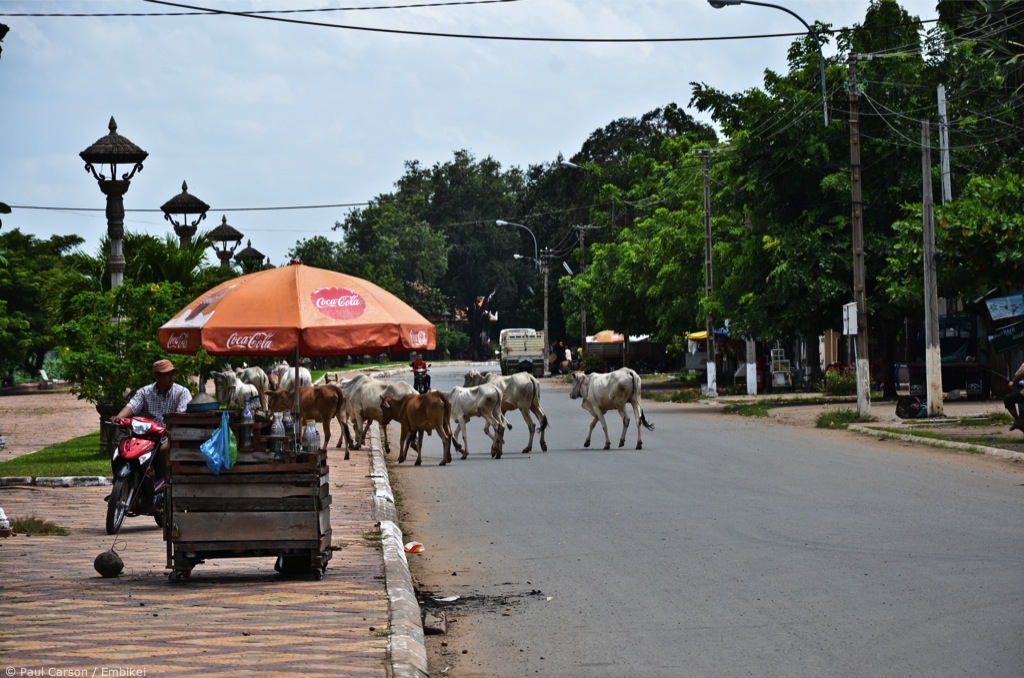
The town still manages to maintain a certain rural charm.

Many of the French Colonial buildings seem to have been kept with some integrity, lacking the more modern adornments (eg. huge billboards) that seem to be bolted on in other towns. Although some of the buildings could do with some attention.